

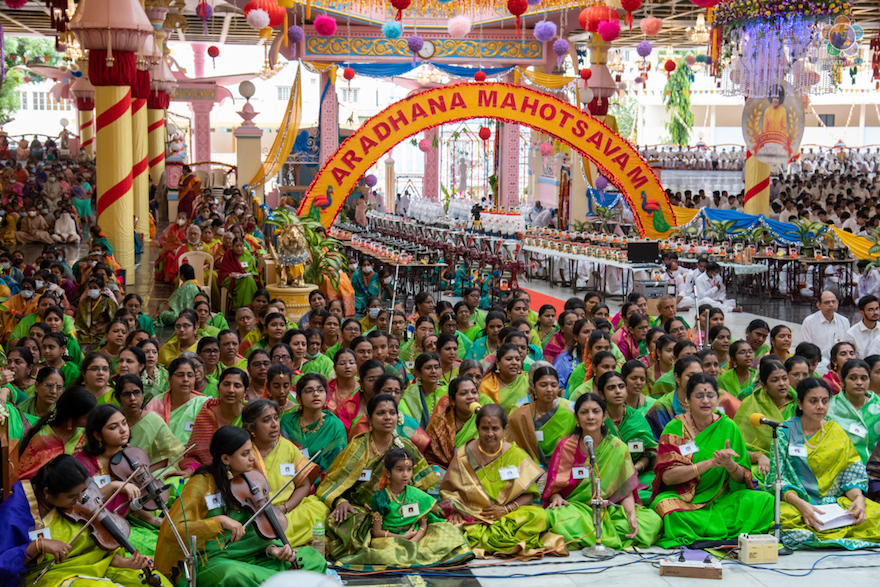
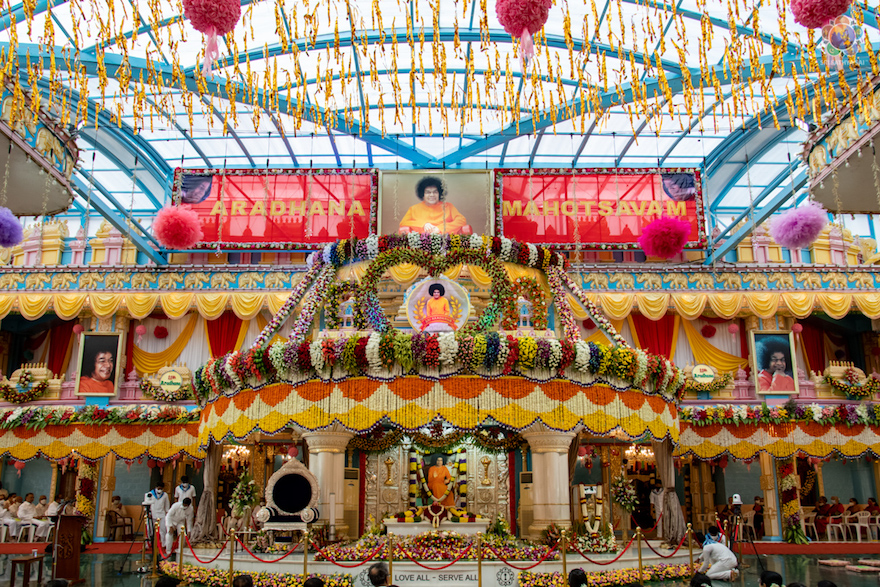
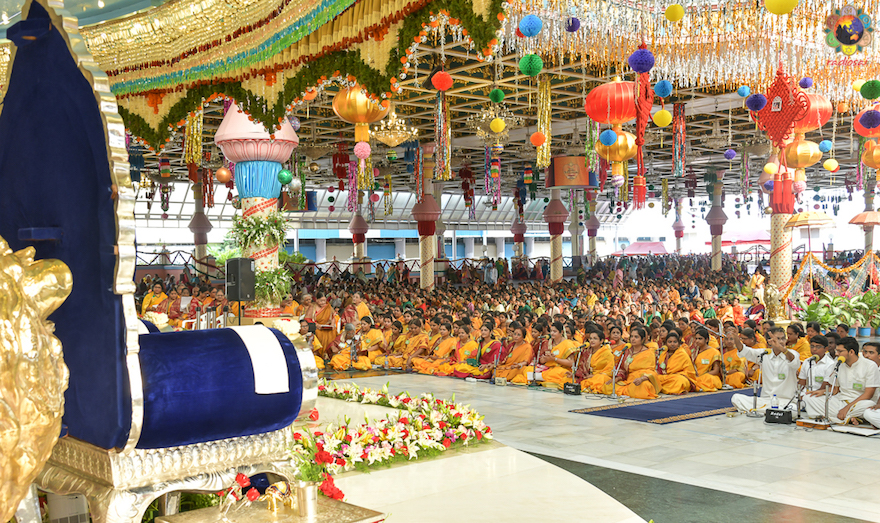
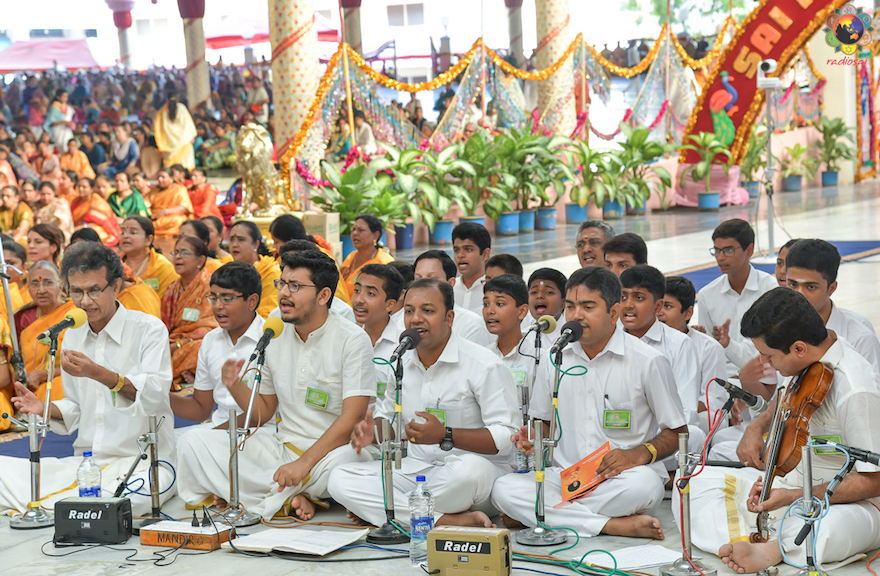
The Sai Pancharatna Kritis are special Carnatic compositions describing the life story and the glory of the Sathya Sai Avatar. They were first presented at the Lotus Feet in the year of Swami's 90th Birthday on Aradhana Day 2015.
The Sai Pancharatna Kritis are special Carnatic compositions describing the life story and the glory of the Sathya Sai Avatar. They were first presented at the Lotus Feet in the year of Swami's 90th Birthday on Aradhana Day 2015.
Subsequent to this presentation, in answer to many devotees' queries, we had many live Radio Sai discussions about the making and the meaning of these compositions in our programs “Outside Inside Deep Inside” as well as “Morning Glory”.
Presented below are edited excerpts of the 'Outside Inside Deep Inside' discussion which had as its participants, SSSMC team members, C. G. Sai Prakash (CG), Anirudh Srinivasan (AS), and Bishu Prusty (BP), as well as Ms S V Vasumathi (SVV), the Vice Principal of Sri Vishwa Vidyalaya Matriculation High School, Chennai. In this episode, they dwell on the musical beauty as well as the profound depth of the lyrics of the third Sai Pancharatna Kriti – “Charana Sevanam”.
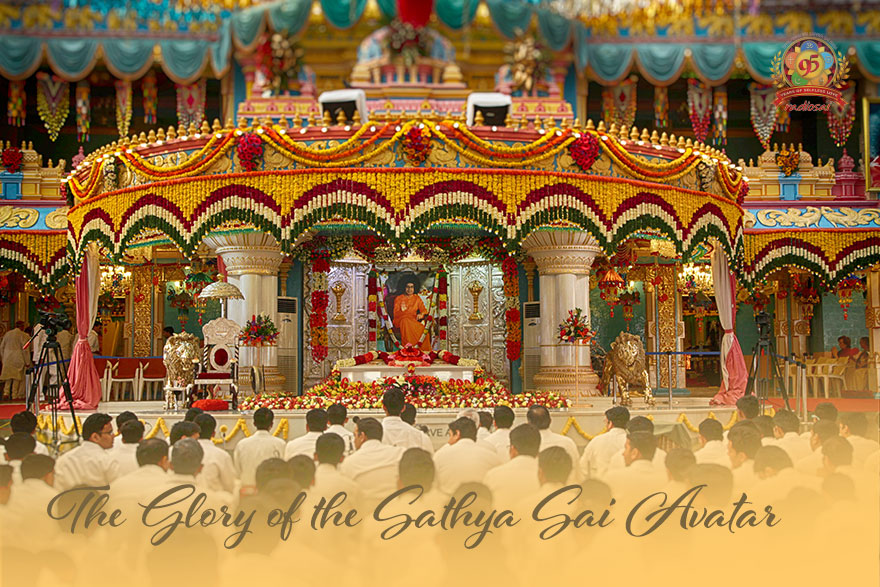
CG Sai Prakash (CG): The third kriti is ‘Charana Sevanam Parama Pavanam’. It's tuned in the raga Arabhi which is a very very beautiful raga, because it's very happy, bubbly and joyous. It fills the heart with such immense joy.
Anirudh Srinivasan (AS): Really, people can appreciate the transition from the second kriti in Mayamalavagowla to this kriti in Arabhi.
Bishu Prusty (BP): The second kriti was very meditative.
CG: That raga was apt for that theme because it was the divine aspect of Swami. Now this kriti focuses on His human aspect which is all bright and glorious! He's there with us, throwing chocolates at us, giving namaskar, pinching somebody's cheek, pulling someone's leg, etc. So it's full of life and beauty! Again, the right raga has chosen the right kriti, in Raj Kumar Bharathi Sir's words! It's a very beautiful composition.
BP: Anirudh can tell us a little more about this raga.
CG: Nice! Let's see how these notes were incorporated into this beautiful tune that made this song a kriti! It's just these notes that have been magically interwoven to make the tune. Let us first listen to the pallavi.
AS: As you would have noticed, there are different varieties of the magical word ‘madhuram’ in this kriti. That is the first thing that struck me when I heard this kriti.
CG: Exactly! How madhuram (sweet) is the word ‘madhuram’!
AS: Beautifully composed!
BP: So many flavours of ‘madhuram’!
CG: Strawberry flavour, raspberry flavour. Ha ha ha! Really very very beautiful.
AS: Each variation is much more beautiful than the previous one.
CG: Yes, it's always in increasing order as if asking, “You think you had it all? Now you wait for the next one.” That is the pallavi. Maybe we can listen to the anupallavi:
The most striking part of this anupallavi is the way the phrase ‘apara jana’ is tuned. It is so amazing! Reaching out to the multitudes who are far off.
In the pallavi, ‘Charana Sevanam Parama Pavanam’ means ‘Serving the lotus feet is the most auspicious. Sai's name and form are the most nectarous and sweet.’ When we saw Swami physically, His darshan was His immediate expression of His love for us and we related to His form and to Him when He gave darshan. ‘Charana Sevanam’ refers to the padanamaskar we got. When we are talking of the human aspect of Bhagawan, touching His lotus feet was such an experience.
BP: Highest blessing!
SVV: To render this kriti in Swami's presence was a great experience. When we had to sit in Kulwant Hall and sing, all the experiences we had kept coming in our mind—how Swami used to come for darshan and how He blessed all of us. For me personally, it was a beautiful experience to sing this kriti. When we sing ‘Madhuram madhuram Sai roopa namam’, all the various expressions of Bhagawan kept coming up.
CG: True. The first two lines so beautifully bring out the aspect of darshan and what Swami does as He comes, how He interacts, and how people take namaskar. ‘Madhuram madhuram’ means every movement of His is sweet—His mudras, His smile, even when He frowns or when He tells someone, “Ey! Koorcho (sit)!” or “Dunnapotha (he-buffalo)!” All these just come flooding back to you in your mind's eye.
AS: I am just imagining this kriti being rendered on mandolin by Mandolin Srinivas Sir and how it would be if Swami is coming for darshan with that background music.
BP: Wow!
CG: How beautiful it would be!
SVV: The original Pancharatna Kritis were what Saint Tyagaraja composed while experiencing Lord Rama. When we sing them, I do not know if as an individual I would be able to rise to that level and experience the same form of bhakti and render them. But when I sang, I could visualise and I could relate to this kriti very nicely because we know how Swami was when He came for darshan and how He smiled at us.
BP: Tyagaraja had to imagine. But we have actually seen the Lord.
SVV: It would be double imagination—what Tyagaraja imagined of Lord Rama! That is far-fetched for me!
BP: We don't have to imagine but only relive.
SVV: Yes. I am sure everyone who sat in Kulwant Hall that day would have experienced this.
CG: They would have relived those moments. The anupallavi is also very beautiful.
Here the lyricist says, ‘Arishadvarga haranam, Harishadvarga varadam, aparajana parivartana daksham’. We know that ‘arishadvarga’ are the six vices of kama (desire), krodha (anger), lobha (greed), moha (delusion), mada (pride) and matsarya (envy) but she also says ‘Harishadvarga varadam’ which means ‘We have to develop the six qualities which are dear to the Lord’. Apart from the five human values of sathya (truth), dharma (righteousness), shanti (peace), prema (love) and ahimsa (non-violence), tyaga (sacrifice) is the sixth noble virtue.
BP: ‘Haranam’ means He is taking away the six vices and ‘varadam’ means that He is the blessing us with these six noble qualities.
CG: ‘Arishadvarga’ are the six vices we have to give up and ‘Harishadvarga’ are the six qualities that Lord Hari or Swami likes. Then comes ‘aparajana parivartana daksham’. This is another very unique aspect of the Sai Avatar. He has touched multitudes of people. In which other Avatar has it happened?
BP: When the Avatar was there in the physical form itself, we had millions who worshipped Him.
CG: Exactly! You can close your eyes and imagine darshan or the Hill View Stadium jam-packed and full of people. That is ‘aparajana’. The way this line is composed also is so beautiful. It's almost as if the last man in the hall will listen to this. It's reaching out till there!
BP: It includes him also! The other very nice thing is that the lyricist says that the Lord is the One who removes the six vices and grants us the six noble virtues. In the next line she says that He is the One who is transforming us. She has explained the process of the transformation! How the Avatar transforms and touches us is by removing the six vices and giving us the six noble virtues. These lyrics have certainly been divinely inspired, no doubt!
CG: Exactly! So that is with regard to the pallavi and anupallavi. Then comes the refrain line which is again very beautiful—‘Karunya lavanya kamaniya gatram’. It's a very unique aspect of Bhagawan that the lyricist has picked here for the refrain line because His voice was so melodious, so mellifluous, so sweet and so tender.
This line means, ‘The One whose enchanting voice is full of compassion and charm.’—‘Karunya lavanya’. His voice itself has compassion and sweetness. This is the line that keeps coming after each charanam. It is a very beautiful aspect because when Swami speaks to us, what do we remember most? We say, “He spoke to me and told me this.” We recollect the sweetness in His voice. That was so central!
BP: The word is such a sacred thing. The Bible says, “The word became God.” The word is ‘Shabdabrahmamayi’ as Swami used to say.
CG: Yes. That's the first form of God. Swami's voice, words and His discourses were so sweet.
BP: Swami used to say that the first thing for a human is that you should know how to be loving through your speech. That is the first thing that defines a person's character.
CG: Yes. There are many charanams in this kriti. The first one is ‘Akhanda vibhuti vaibhava sundaram’. It means ‘Your leelas and mahimas are infinite. Your glory and grandeur are endless.’ The second charanam is ‘Satyam shivam sundaram manavata moolya sambharitam’ and it means ‘The One who is the embodiment of Truth, Auspiciousness and Beauty and the repository of all human values’.
This charanam drives home a very beautiful point because it's easy to sit on a platform and teach but when you actually live your message, that is what touches everyone. Everything Swami did was with love. He lived His message! His life itself showed ‘Satyam Shivam Sundaram’ or ‘Truth, Auspiciousness and Beauty’. Sathya Sai Baba is truth! How auspicious and how beautiful every moment in His presence was!
BP: It is really very apt. When Bhagawan's biography was written, Prof. Kasturi suggested so many names but Swami picked ‘Satyam Shivam Sundaram’ because He felt this is what aptly describes His life. In that one line ‘Manavata moolya sambharitam’, the lyricist has encapsulated what the human aspect of Bhagawan is. As a human He was full of truth, goodness and beauty.
CG: Yes. Next we go to the third charanam. Very beautifully the lyricist says ‘Vinaya bhasura mridu subhashana sahana sheela tyagamaya rupa’. It means ‘The One who is radiant with humility, sweet in speech and forbearing by nature has sacrifice as His form.’
I remember how Swami would walk as He came out of His room for darshan during the period when He was walking. The way He would look down, with His hand raised in a mudra was so beautiful! That whole gesture of Him looking down at the sand, waving His hand and coming for darshan to me was so beautiful and showed Him as an embodiment of humility.
BP: Everything was there—humility, grace and majesty!
CG: You can say that humility is a human virtue but Swami was an embodiment of humility. Another aspect which is really striking is that here is somebody who's just given a discourse on the highest spiritual truths—Atma, Paramatma, etc. But when He comes down from the platform, He becomes one amongst us!
BP: The most amazing thing is many times at the end of the discourse He would say, “I'm sorry if I troubled you.” If sages get one second from Him, they will consider it a blessing! He gave us an hour of His discourse and then had the humility to say “I'm sorry”!
CG: One step higher would be when He came and asked, “How was the discourse? Was it good?” There were the few chosen ones who got to say, “Swami, yes it was quite good. This point was nice.” He would say, “Oh! You liked it?”!
AS: He would even ask, “Was it too long?”
BP: It's not easy for someone who's the repository of everything to say such things. The lyricist has very beautifully elaborated on this!
CG: We should listen to this charanam.
That is one more beautiful aspect of Swami's human form—humility and sacrifice. That is what is brought out in this third charanam.
The next or fourth charanam takes on a very very different aspect and an important one. ‘Pancha bhootadhara sarvajeevanadhara, sarvavyapaka sarva shaktimaya sarvajna’. It is actually a divine quality but Swami manifested it in His human form—the power of omnipotence, omnipresence and omniscience.
‘Pancha bhootaadhaara’ means that Bhagawan is the basis of the pancha bhootas or five elements. We know the famous incident of Him saying, “I don't depend on the pancha bhootas. They depend on Me!” ‘Sarvajeevanadhara’ means He is the basis of all forms of life, ‘sarvavyapaka’ means He is omnipresent, ‘sarva shaktimaya’ means He is omnipotent and ‘sarvajna’ means He is omniscient. If we take this one line and start elaborating on it, we can go on for a whole session! There are so many books written with so many beautiful experiences and incidents!
BP: There is no count and the beautiful thing is that it continues even now.
CG: There is no end, there is no beginning. ‘Adi antyamuleni’ as we sang in the first kriti!
BP: All the people who have had amazing experiences with Swami are now writing books. Every other day we find a new book because there are so many people whom Swami has touched in such myriad ways. But there are also people who came to Swami just in 2010 and 2011 or even in 2012. They are also writing books now!
CG: The way these kritis have come up is itself a testimony! For those who have heard our previous sessions on how and what all we went through, it is part of the whole thing. Swami just shows, “I am doing everything.
The fifth charanam also has a beautiful theme because the lyricist says ‘Bhakta sakha chittakaasha gnana bhaskara’ which means ‘You are the dearest friend of Your devotees and also the effulgent knowledge in their minds’. See, Swami is the one giving knowledge but He is the knowledge too. He is everything!
But the most important aspect of this charanam is ‘Vatsalyadi gunojjvala Sai sadaya’. The lyricist says, “Yes, You did all this. You gave knowledge and You gave adhyatmika sutra traya but with what? Love!” ‘Vatsalyadi’ means ‘the love of a mother’. Swami would say, ‘love of a thousand mothers’. It was nice to quote but it's something we cannot comprehend. He would say, “You people have not understood even one mother's love. How will you comprehend a thousand mothers' love?” With that love Swami shared this knowledge. It's not knowledge shared for the sake of sharing. It is with love!
We now move on to the sixth charanam. Again this is something we can really relate to. It begins with ‘Mata pita guru daivamu mari sakhudavu neevainavu’ which means ‘You became our mother, father, guru and friend’. Then comes ‘purajanma paramparagata mokshadayaka punyaphalam, bhaktaliki parama nidhanam amulya mooladhanam’. This means, ‘You have become our mother, father, preceptor, friend and God. You are that good fortune that can liberate us from all our past actions and lineage. You are the supreme spiritual home and the invaluable treasure for devotees.’
BP: This is what Bhagawan was in that human form to every devotee!
CG: Right. For your every goal and ambition, He was there. If we want to purify our life, we can go to Him. If we want to look at Him as our mother, we can do that. Swami is our mother, father, guru and friend. He has played every role. For those who had the good fortune of His physical proximity, especially students, He was such a loving friend to them. At the same time, a guru! Such an unimaginable mix of all roles!
Then we come to the final charanam in this kriti. It is very very comprehensive and beautiful. It is the longest in this kriti and also possibly the most complex.
BP: Even though there are only seven charanams, the last one is so huge!
CG: With good reason! It brings out such beautiful aspects which summarise the theme of the entire kriti. Let us listen to it.
AS: Oh God! This is very very difficult!
CG: Such a beautiful but complicated tune!
AS: To compose these many charanams without having any repetition in the phrases is very tough. Each charanam gives a new flavour of the raga Arabhi with different swara patterns and different endings. It's just amazing! Unbelievable composition! Humanly it is just impossible to compose five kritis with about eight charanams in each and with no repetition of swara patterns in every charanam.
CG: Also, each charanam is so beautiful and so unique!
BP: It explores all the facets of the raga in different ways.
SVV: This is as breathtaking as the darshan itself! Ha ha!
CG: Yes. This charanam says, ‘Animisulakeesu janimpaga antevaasula darshana vela’ which means, “When You are giving darshan to Your students (‘antevasula’ means those who have stayed back with the guru, like in the gurukulam days), definitely the devas (demi-gods) are feeling jealous thinking, ‘What's happening?’ because of the way You are spending time and moving with them.”
How does Swami spend His time with the students? The next line says, “Pari pari natanala joopuchu” which means that He shows various divine actions like materialising vibhuti or patting them on the cheeks or chiding them or encouraging someone. He would do so many things even when He was amongst devotees but more with the students.
‘Abhayamosaguchu’ means that He would give His ‘abhayam’ or ‘protection’. The next line is “Na hakku meeranuchu.” Swami would say, “You are mine. I have the right over you.” That's the highest form of owning somebody!
This particular phrase comes from a beautiful incident at Kodaikanal in 1999. Do you remember, Bishu? You were also there. One of those days, Swami was ‘upset’ with the boys and was really bringing it out on all of us. We wondered, “Swami, is it such a big sin that You chide us so severely?” We felt lost for a while. But in the afternoon when He came out, He said these words which I can never forget in my life.
Swami said, “Do you think I'll go to the road, stand there and shout at people around? No! I come here and shout at you all, chide you and correct you because I feel that right over you. I feel you are my own. Na hakku! Neepaina hakku undhi ra.”
The lyricist says, “You give them abhayam but then You tell them ‘naa hakku meeranuchu’ or ‘I have that right over you’. Then You say ‘Me vadanenanuchu’ which means ‘I am yours’.” First of all He gives the blessing. Next He says, “I have that right over you” and then finally He says, “I am yours!” How beautiful!
What Swami wants from students is nothing. He says ‘satkirti’ which means ‘good name’. He always says, “You get a good name for yourself and be happy.” He has given Himself and has become everything for the students. But then He says, “I want nothing from you! All I want is that you get a good name for yourselves.”
BP: We have heard that any number of times.
CG: The first part of the meaning of this charanam is, “You ask them about their welfare and then take their letters. Then You give them abhayam and say ‘na hakku miranuchu’. Then You say ‘Mee vadanenanuchu’ which means ‘I am yours’. Finally, You say, ‘I don't want anything for all this. Just get a good name for yourselves.”
Then the lyricist concludes this charanam with a line which means, “You are the gardener of our hearts who has transformed our path of life into a flowery garden.”
It is really like a sunflower garden because as the sun moves amongst the students, the bright faces keep changing in the direction of the sun! How beautiful this simile is! Very apt here!
We can just visualise the veranda where Swami is standing in the middle—that orange flame—and all the white-clothed students sitting around Him. As He moves around, everybody turns to face Him and that whole scene comes alive in the mind's eye! This charanam is so comprehensive and the way it has been tuned is itself so unique.
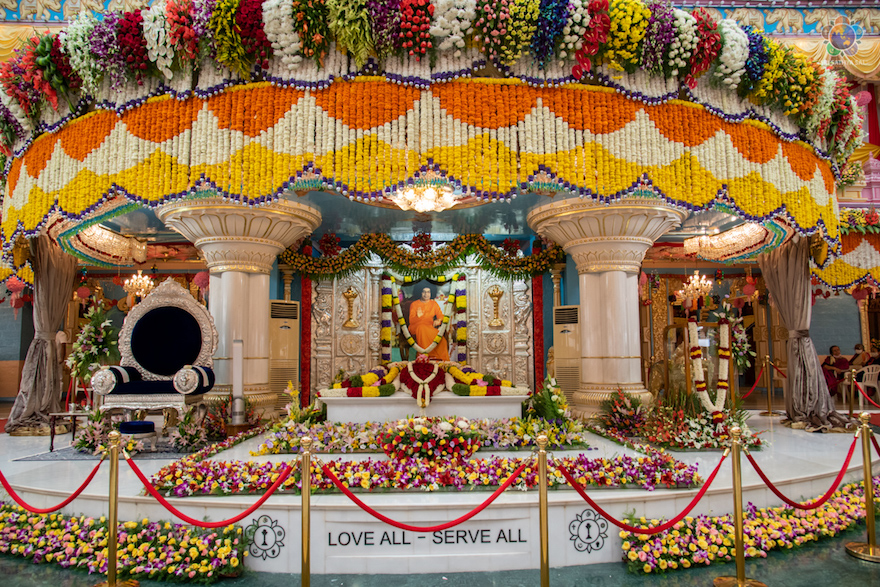
BP: Here the lyricist is talking about the human aspect of Swami and I feel that the community which had the opportunity to see this aspect in all its facets was the student community. That is why the last charanam is so much focussed on that aspect of Bhagawan's relationship.
CG: Yes. First comes ‘kushalamuladuguchu’ and then the next level is ‘lekhala chekonuchu’. In the composition, you see it ascending. Swami first asks, “How are you?” but then He also takes your letter and next He gives abhaya. It goes one step higher! Then He says, “I have the right over you.” Next He says, “I am yours!” It actually builds up! If you analyse the composition you will see this. We should listen to it 3-4 times to appreciate the beauty.
SVV: We heard it 100 times to learn it! Ha ha ha! Not 3-4 times!
CG: You must have heard it 100 times to learn it but even to understand and appreciate the beauty we need to listen to it multiple times because it is so comprehensive. This kriti ends with this charanam but there is one more paragraph.
Don't all of us ask, “Swami, what can we do for You? You have given everything to us and You are everything for us.” The lyricist says, “Our body is Yours; our thoughts are Yours; the form which is shining in our hearts is Yours! We reverentially offer our lives as a garland of flowers fragrant with the nectar of love at Your Lotus Feet.” It's just an offering of gratitude.
BP: The last paragraph is a very beautiful summary of the relationship between Swami and students. Swami would give them the opportunity and then correct them. Ultimately all the students can say is, “Swami, everything of ours is Yours.”
CG: The kriti really ends with this feeling of immense gratitude we have for Bhagawan for being everything of ours.
BP: Wow!
Featured Articles
No articles found
Try adjusting your filters or search terms.